
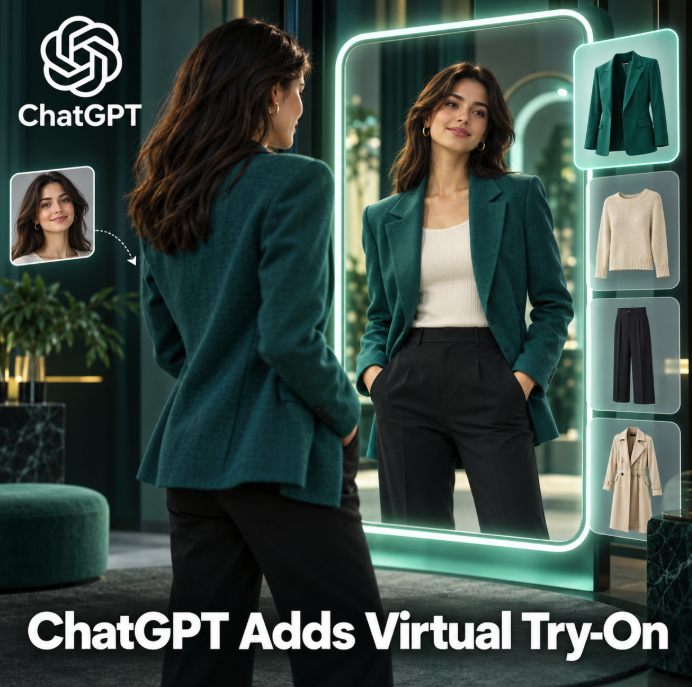
ChatGPT is bringing a visual fitting-room experience into product discovery. Shoppers can generate an image of how clothing or accessories could look on them directly from a product listing. For merchants and SEO teams, the development brings product presentation closer to the moment when a shopper evaluates an item, although its effect on purchasing remains unmeasured in the announcement.
What OpenAI officially announced
OpenAI’s October 1, 2026 release notes describe a “Try on” button on clothing and accessory listings. Users select it, then take or upload a selfie. ChatGPT Images generates the virtual try-on.
The reference photo is saved for subsequent try-ons and can be changed or deleted through Settings, Personalization, Reference photos. The same update introduces saving products to Favorites or organizing them in folders in the ChatGPT Library. OpenAI lists availability on mobile and web. The announcement does not specify an official publication hour or provide conversion results.
Discovery and visual evaluation share an interface
Our editorial interpretation is that a shopper can now move from finding an item to imagining it on themselves with fewer transitions between tools. A product card becomes an entry point for another stage of evaluation. That changes the questions merchants should ask about presentation, even before there is evidence of a commercial uplift.
A generated visualization should not be treated as a verified measurement of fit, fabric behavior or size. The release describes how an item could look, not a physical fitting guarantee. Product specifications, sizing information and the merchant’s own offer remain important evidence for a purchase decision.
What product imagery means for SEO teams
The practical recommendation is to review whether product images clearly communicate the item being offered. Check that imagery, descriptions and variant information refer to the same product. Ambiguous color choices or outdated photography can make a customer’s evaluation harder, regardless of whether they use virtual try-on.
These are editorial quality recommendations. OpenAI’s release notes do not establish new image ranking factors, merchant admission rules or a guaranteed relationship between image quality and visibility. They also do not explain how every product qualifies for the Try on button.
Catalog inclusion and engagement are separate questions
A merchant needs to distinguish whether an item appears in a shopping result from what happens after it appears. Virtual try-on adds another possible interaction, but its availability does not prove that a product will be selected, clicked or purchased.
Where measurement is available, keep product exposure, try-on interactions, merchant visits and completed purchases separate. Avoid counting a generated image as a conversion. A shopper may use the visualization to reject an item, compare alternatives or return to it later; those are different outcomes with different commercial implications.
Saved products may extend the evaluation journey
Favorites and folders offer a way to revisit products rather than make an immediate choice. Our inference is that a saved item can belong to a longer research sequence. The announcement does not show how often users return or whether saved products receive preferential placement.
Teams assessing performance should therefore consider the timing of a decision as well as the first interaction. A same-session click is only one possible signal, and simultaneous changes in sales do not establish that virtual try-on caused them.
A new experience, with commercial effects still to establish
The official update expands what shoppers can do inside ChatGPT: discover an item, visualize it and save it for later. For SEO and AI commerce teams, the useful next step is to improve the clarity of product information and observe the actual journey. Claims of better rankings, more accurate fit or higher conversion would require evidence beyond these release notes.