

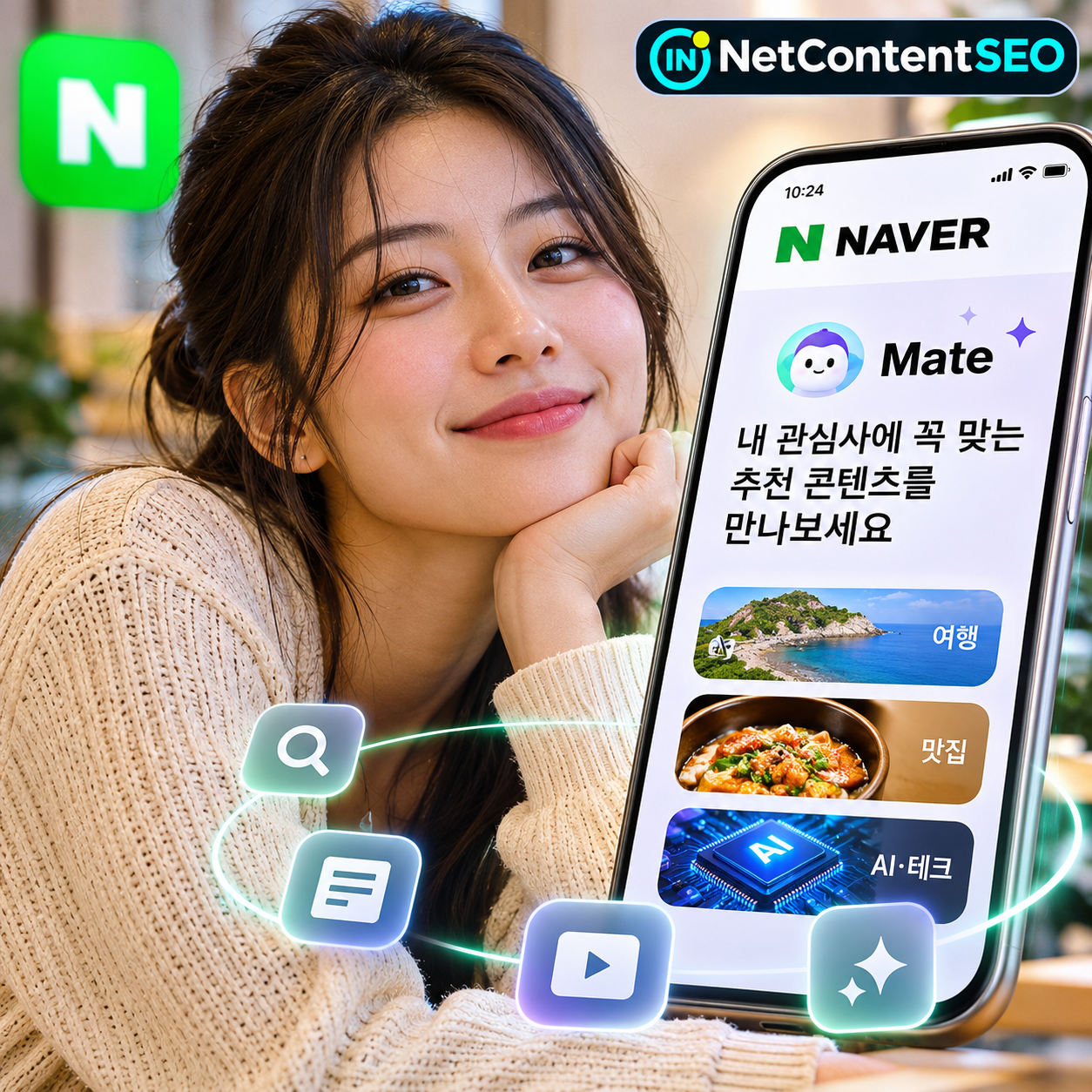

Naver is making creator expertise part of the AI-search discovery experience. The Korean search company's Naver Mate initiative connects specialist bloggers, community contributors and other creators with Naver's search and AI Briefing surfaces. A Naver Search blog post titled “내 관심사에 꼭 맞는 네이버 메이트 추천 콘텐츠를 만나보세요” translates approximately as “Discover Naver Mate recommended content tailored to your interests.” Its headline signals an interest-oriented recommendation angle. However, the supplied blog post could not be independently retrieved in full, so its precise interface, rollout scope and recommendation mechanics remain unverified.
What Naver has actually confirmed
Naver officially launched Naver Mate on June 4, 2026, as a beta program supporting human creators whose subject knowledge and original experience add value to an AI-driven information ecosystem. At launch the company described approximately 3,000 featured creators per month across 25 subjects in ten broader fields, initially spanning Naver Blog, Cafe communities, Knowledge iN and Premium Content. Naver also announced creator badges visible in integrated search and AI Briefing, alongside financial support for selected participants. These are documented program characteristics, not proof that every Mate article automatically receives preferred ranking.
Source: Naver's June 4 official announcement. The official Naver Mate FAQ adds an important qualification: AI Briefing citations are one consideration among several in Mate selection, but high citation counts alone do not guarantee admission.
How Naver evaluates content for AI Briefing
Naver's own help material identifies five broad considerations when AI Briefing summarizes, recommends and links to content: expertise and experience, topical consistency, authenticity and transparency, readability, and activity and recency. The company describes a multi-factor algorithm rather than a guaranteed five-point optimization formula. Its Search Advisor content guidelines also encourage creators using AI tools to add their own experience and perspective instead of publishing merely generated or summarized material.
That combination deserves attention: Naver is explicitly connecting the information used to construct AI answers with people and communities that have accumulated relevant firsthand knowledge. This does not mean AI-written content is categorically excluded, nor does it establish that a visible Mate badge is a direct ranking factor.
Why interest-based recommendations matter for SEO
Traditional search optimization often starts with a query and a ranked results page. An interest-oriented recommendation layer potentially creates another discovery moment: a user may encounter a relevant expert's explanation while exploring a topic, without repeating the original keyword query. If Naver's new post describes that kind of experience, publishers should assess visibility beyond ordinary blue-link positions. But the specific recommendation inputs—search history, subscriptions, behavioral signals or other personalization data—cannot be established from the inaccessible post and should not be presented as confirmed details of this feature.
For SEO teams, the strategic issue is a broader distribution model. One well-substantiated page may need to serve traditional organic search, an AI-generated answer with attribution, a creator profile and personalized discovery. Those placements are different: indexing is not the same as citation, citation is not the same as a referral click, and recommendation exposure is not the same as organic ranking.
Implications for AI Search and GEO
First, topic depth matters more than isolated keyword coverage. A publisher repeatedly producing useful, verifiable material within a clear area of competence may be easier for readers and AI systems to contextualize than an account jumping between unrelated trends. That is an editorial inference supported by Naver's stated preference for topical consistency—not a promised ranking uplift.
Second, original observations are increasingly valuable source material. Practical tests, dated field reports, creator photographs, reproducible comparisons, expert explanations and clearly sourced updates make an article more distinctive than generic summaries. Where a claim can change, publishers should show when it was verified.
Third, write answers that survive extraction. Use descriptive headings, concise explanations, clear entity names, useful caveats and direct supporting evidence. An AI system may summarize only part of a page; a paragraph should communicate the essential answer without stripping away critical conditions. Naver also maintains conventional technical SEO guidance, so accessible pages, meaningful titles and sound markup still matter.
Fourth, attribution needs its own measurement. Naver Mate's emphasis on AI Briefing citations makes citations a useful observation, but not a substitute for traffic, conversions or repeat readership. Where platform data is available, record whether content is cited, where it appears, whether referral sessions follow and whether relevant branded searches change. Do not infer commercial outcomes from citation counts alone.
A practical checklist for publishers
- Audit your subject clusters: identify the topics in which your site offers documented expertise rather than derivative coverage.
- Upgrade high-value pages: add firsthand evidence, named sources, tested steps, publication/update dates and limitations.
- Review answer completeness: check whether a reader can act on the answer without needing another search for eligibility, cost, exceptions or next steps.
- Keep technical fundamentals intact: verify crawl access, indexability, canonical URLs, accurate titles, and helpful internal navigation using Naver Search Advisor where relevant.
- Separate discovery channels: monitor organic ranking, AI Briefing attribution, recommendation exposure and on-site outcomes independently where measurable.
- Run controlled editorial experiments: compare updated evidence-rich articles with otherwise similar pages, documenting dates and avoiding causal claims from small samples.
What is not yet proven
The supplied Naver Search post's headline suggests personalized recommendations of Naver Mate content, but its full text was unavailable for verification. As a result, no claim is made here about a specific new button, placement, eligibility rule, country-by-country rollout, algorithmic weighting, or measurable traffic increase attributable to that exact announcement. Likewise, evidence from Naver's Korean ecosystem cannot simply be transferred to Google AI Overviews, ChatGPT Search or other AI search systems as if they used the same selection criteria.
The larger lesson
Naver Mate illustrates a direction worth watching: AI answers and recommendations can coexist with efforts to identify and reward the people behind high-quality source material. The durable SEO opportunity is not to chase a badge or manufacture AI-friendly prose. It is to build a body of content that demonstrates genuine expertise, answers real questions, earns trust and remains useful when surfaced in formats beyond the conventional search results page.
Primary references: Naver Search blog post (provided reference; full text not independently accessible); Naver Mate official press release, June 4, 2026; Naver Mate official FAQ; Naver Search Advisor content guidance.