

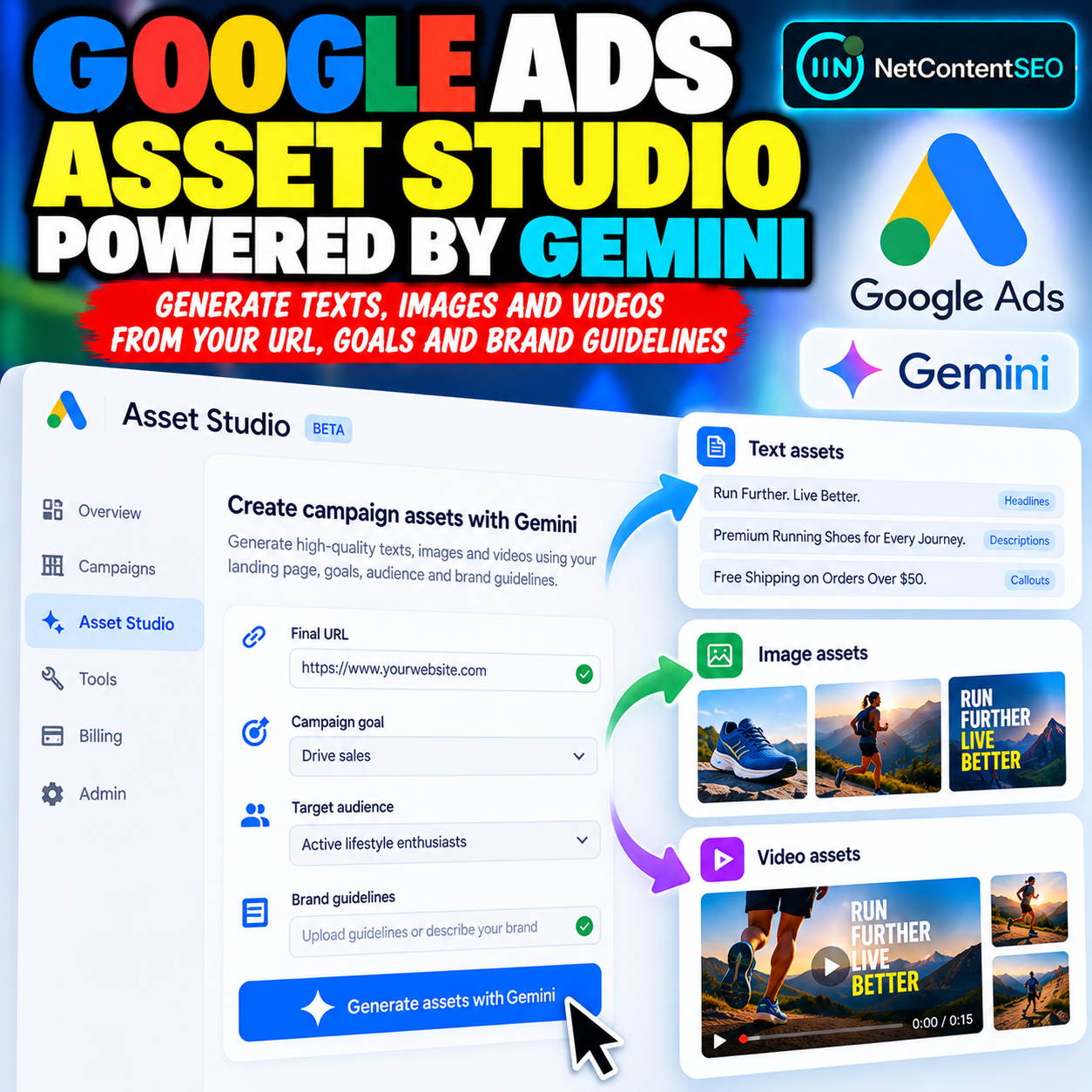

Google Ads is showing an AI-powered Asset Studio workflow that can generate text, images and video concepts from campaign and brand inputs, according to an October 9, 2026 report by PPC News Feed. The interface was highlighted by Thomas Eccel. The reported workflow uses information such as a final URL, campaign objectives, target audience and brand guidelines to shape the generated assets.
There is an important distinction in the evidence: Google already documents AI-powered, prompt-based asset generation in Asset Studio in its official help materials. However, the specific interface observation described by PPC News Feed should not automatically be treated as a separately announced product launch or as proof that every advertiser has access to the same workflow.
What the reported workflow does
According to PPC News Feed, advertisers can provide campaign context—including a final URL, objectives, audience information and brand guidelines—and use that information to generate creative assets. The reported outputs include text, images and video, with inputs that help tailor the results to a campaign and brand.
This reflects the broader direction of Asset Studio: bringing creative generation, editing and asset management into Google Ads rather than requiring advertisers to move between multiple external tools. Google's official documentation describes a prompt-based workflow for generating batches of text, image and video concepts and refining them before use.
How Google's documented Asset Studio workflow works
Google's current help documentation says advertisers can provide a prompt and optional inputs such as product images, documents and brand guidelines. Asset Studio can then group generated concepts by type and theme, allowing users to review and refine them. Generated assets can be saved for later use or added to campaigns after review.
The official guidance also notes that access to generative AI features is required and that prompt and model understanding is currently supported in global English. Availability may vary by account and feature access, so advertisers should check their own Google Ads interface and the current help page.
Why landing pages and brand guidelines matter
A final URL gives the system a source of campaign context, while objectives and audience information help define the intended message. Brand guidelines can provide constraints on style, tone and visual identity. Together, these inputs can help the generated assets stay closer to the campaign brief.
However, generated assets still need human review. Landing pages can contain outdated details, broad claims or information that is not suitable for an ad. Brand guidance does not guarantee factual accuracy, policy compliance or campaign performance. Advertisers should verify claims, product details, legal requirements and destination consistency before publishing.
What advertisers should do
- Check Asset Studio access. Open the Asset Studio area in Google Ads and review the prompt-based creation options available to the account.
- Use a current final URL. Make sure the landing page reflects the offer, product and claims the campaign is meant to promote.
- Provide clear goals and audience context. Give the system a focused brief rather than relying on a URL alone.
- Upload current brand guidance. Include approved tone, visual rules and required wording where the workflow supports it.
- Review every asset. Check generated copy, imagery and video concepts for accuracy, brand consistency and policy issues.
- Measure results separately. Asset generation can speed up creative production, but it does not by itself demonstrate better conversion rates or return on ad spend.
What is confirmed—and what needs qualification?
- Reported on October 9, 2026: PPC News Feed described an Asset Studio interface highlighted by Thomas Eccel, using campaign and brand inputs to generate creative assets.
- Officially documented in general: Google Ads Asset Studio supports AI-powered creation and refinement of text, images and video using prompts and contextual inputs.
- Not established by the report alone: that the exact interface observed is a brand-new feature announced on October 9 or available to every advertiser.
- Not guaranteed: improved performance, policy approval or perfect brand consistency for generated assets.
Frequently asked questions
What is the reported change in Google Ads Asset Studio?
PPC News Feed reported a workflow using Gemini-powered AI to generate text, images and video concepts from inputs such as final URLs, campaign objectives, audience information and brand guidelines.
Has Google officially announced this exact interface?
The specific October 9 interface observation was reported by PPC News Feed and highlighted by Thomas Eccel. Google does officially document AI-powered prompt-based asset generation in Asset Studio, but that general documentation should not be mistaken for a separate announcement of every interface detail in the report.
Can Asset Studio generate more than images?
Yes. Google's help documentation describes prompt-based generation of text, image and video concepts, with review and refinement before assets are used.
Can generated assets be published without review?
Advertisers should review the output before deployment, checking factual accuracy, brand rules, landing-page consistency and ad policies.
Does using Gemini guarantee better campaign performance?
No. The workflow can help produce creative variants, but performance must be evaluated using campaign data. The reported interface does not establish a performance lift.
The takeaway
Google Ads Asset Studio is moving toward a more unified AI creative workflow, using campaign context and brand guidance to help generate text, images and video. PPC News Feed documented a specific interface on October 9, while Google's official help already confirms the broader prompt-based capability. The editorial distinction is important: the general AI workflow is official, but the exact reported interface should not be described as a newly announced universal rollout. Human review and campaign measurement remain essential.
Sources
PPC News Feed — Asset Studio Now Powered by AI in Google Ads (October 9, 2026); Google Ads Help — How to create image, text, and video assets with a prompt in Asset Studio; Google Ads Help — About Asset Studio.