

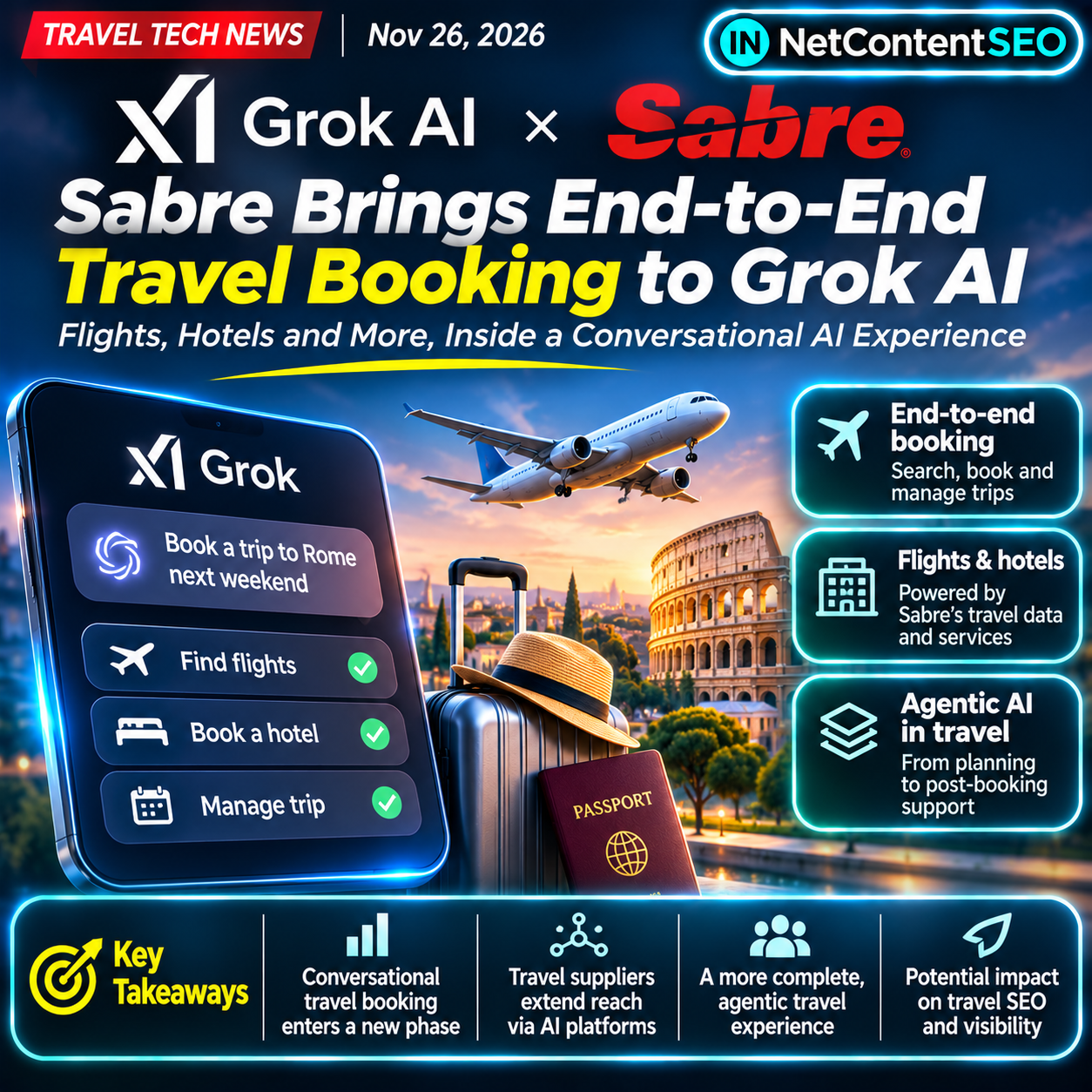

Travel discovery is becoming a transactional service. Sabre's planned integration with Grok illustrates how an AI assistant could move from recommending a destination to managing the practical details of a trip. A TravelMole report published November 27 revisits an initiative first announced by Sabre on November 16 and previewed at its Investor Day. The connector is in beta; unrestricted consumer access has not been established.
From discovery to fulfillment
Sabre Mosaic Travel Connector is designed to combine flight and hotel comparison, reservations and later itinerary servicing in a conversational environment. Grok Bot is the initial destination for an architecture intended to support other AI platforms.
↓
↓
↓
Infrastructure at scale
MCP partners in pilot or production
Daily travel shopping requests
Approximate travel data volume
These company-reported figures describe Sabre's broader infrastructure, not Grok booking volume or adoption. The Model Context Protocol provides an interface for assistants to use connected tools, while the travel distribution system remains responsible for the underlying inventory and transactions.
Proactive travel management
The announced event-driven APIs are intended to notify connected systems when fares change or disruptions occur. Depending on configuration, an advisor or automated workflow can respond. This architecture could reduce repeated manual checks and unnecessary inventory polling, although measured operational savings have not been established.
↓
↓
↓
What this means for travel SEO and GEO
Travel publishers help users understand destinations, while distribution networks supply bookable inventory. These roles increasingly intersect but remain distinct. An excellent destination guide can inform an AI answer without participating in a transaction. Conversely, an inventory provider may enable a reservation without receiving a conventional organic click.
Travel businesses should maintain accurate property identifiers, availability, cancellation terms and accessible contact information. Where appropriate, supported booking integrations can complement editorial visibility. There is no evidence that simply publishing structured data guarantees access to Sabre's distribution network or selection by Grok.
Measure the full discovery-to-booking journey
| Layer | Metric |
|---|---|
| Discovery | AI mentions and citations |
| Recommendation | Inclusion among relevant offers |
| Availability | Accuracy of bookable inventory |
| Transaction | Confirmed bookings and attributable revenue |
| Servicing | Successful authorized changes and disruption resolution |
These are proposed measurement dimensions, not metrics currently supplied by Grok. Travel marketers should separate organic references, commercial distribution and paid placements. Consent, payment authorization and accurate terms remain essential when moving from information retrieval to consequential actions.
What comes next
Sabre intends to extend its connector across additional conversational ecosystems during 2027. Skift's reporting identifies the early deployment as private beta and highlights unresolved commercial economics. Platform-specific launch dates and general consumer eligibility remain uncertain. For GEO professionals, the development underscores a new distinction: being visible in an answer is not the same as being eligible to fulfill the task.