

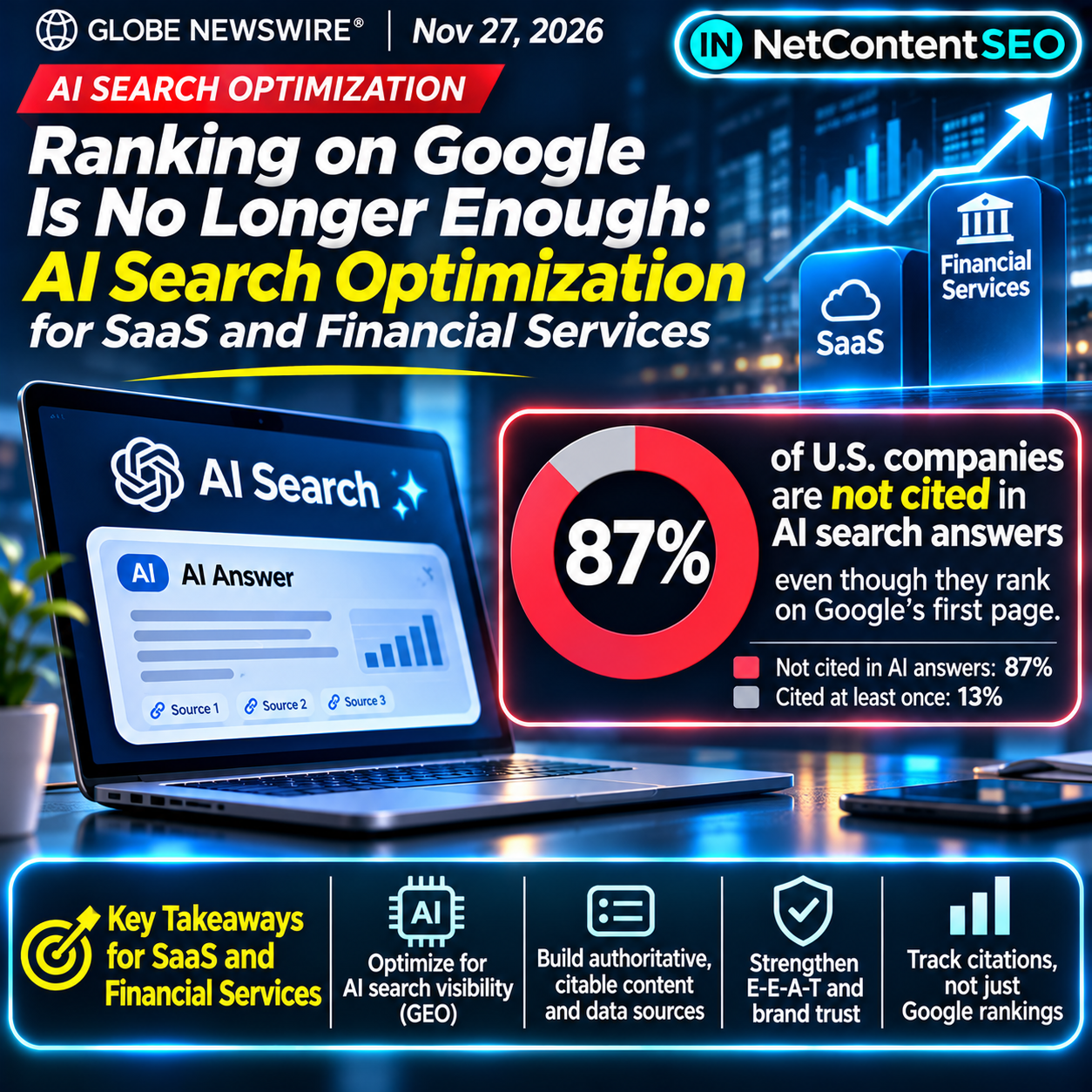

A November 27 press release from NEWMEDIA.COM argues that businesses need to measure visibility in AI-generated answers alongside conventional search rankings. Its commercial framing deserves scrutiny: the release does not establish that all organic search is moving to AI.
The visibility gap
The vendor attributes an 87% absence figure to its RankOS AI Visibility Benchmark, referring to US businesses with first-page Google rankings that were absent from AI answers. The sample size, prompt selection and evaluation methodology have not been independently verified.
Reported absence from AI answers
87% reported absent · 13% remaining share
Vendor-reported benchmark, not a representative estimate of all US companies.Why SaaS requires a different measurement approach
Software buyers often compare features, integrations, pricing and implementation requirements before contacting a supplier. AI assistants can synthesize these attributes into a shortlist. Publishers should maintain accessible product documentation, current pricing information where available, clear integration requirements and dated release notes. None of these practices guarantees inclusion in an AI answer.
Financial services: accuracy before visibility
Financial information can influence consequential decisions. Providers should identify the applicable jurisdiction, eligibility conditions, fees, risks and dates of disclosures. Clear authorship and links to regulatory or primary documentation help readers verify claims. AI visibility should never be pursued at the expense of accurate risk disclosures or regulatory compliance.
Three separate layers of search performance
↓
↓
Build a reproducible GEO baseline
| Dimension | Measurement |
|---|---|
| Brand visibility | Share of controlled prompts mentioning the brand |
| Source visibility | Frequency of citations to owned and third-party sources |
| Answer accuracy | Correctness of product, pricing and eligibility claims |
| Referral performance | Identifiable AI referral visits and conversions |
Record the engine, model version where known, market, language, date and prompt. Repeat tests to distinguish stable patterns from response variability. Controlled prompts are not representative of actual user demand unless validated against appropriate evidence.
Continue monitoring traditional rankings alongside AI visibility. Our Search Volatility Monitor provides a separate perspective on ranking fluctuations.
Conclusion
The press release raises a useful measurement question but its headline and proprietary benchmark should not be treated as independent proof of a universal shift in search behavior. SaaS and financial services teams should preserve their SEO foundations while developing repeatable AI visibility tests and measuring commercial outcomes separately.