

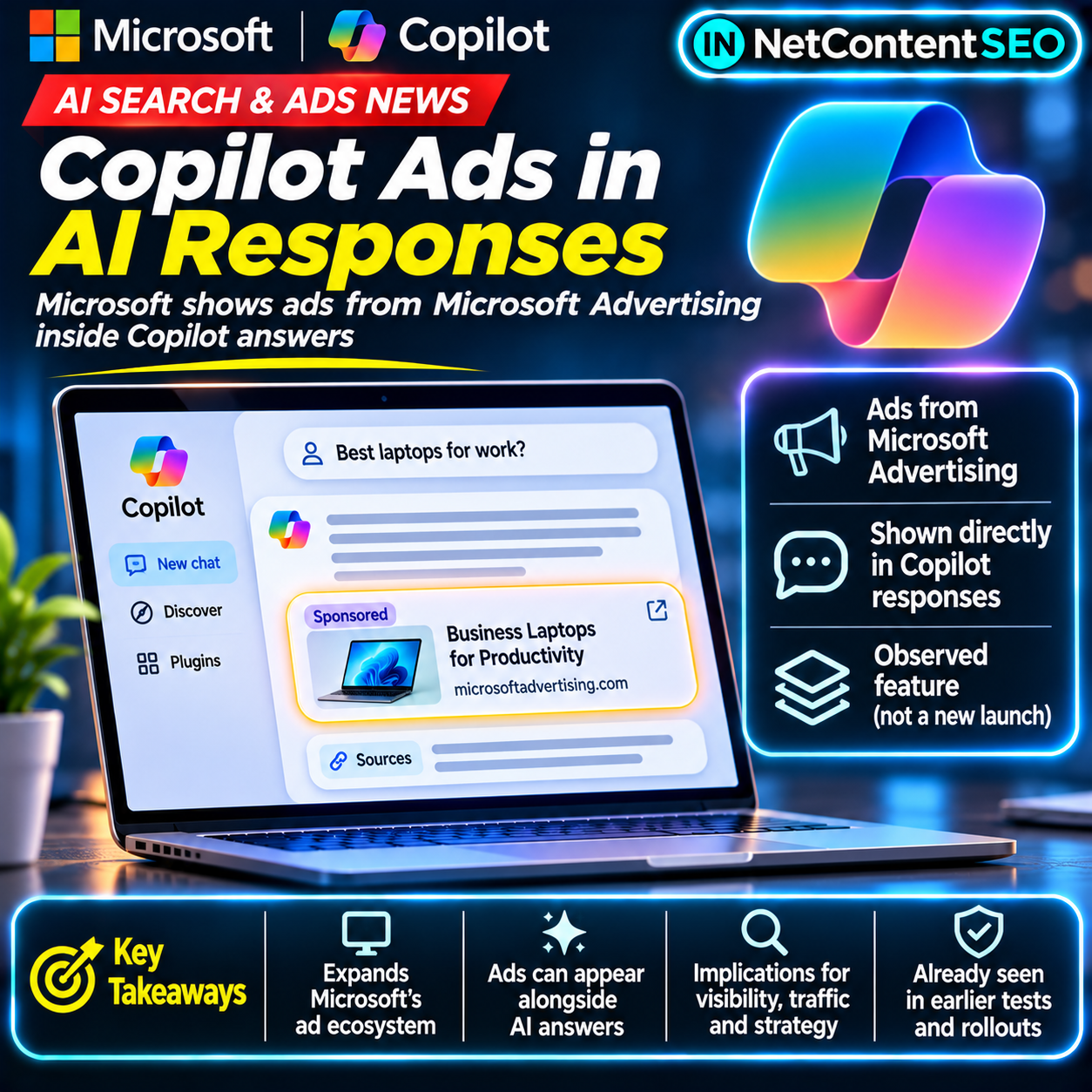

Advertising is becoming part of conversational discovery. On November 27, 2026, Barry Schwartz reported an example of Microsoft Advertising placements appearing inside a Copilot response, based on a screenshot shared by Anandu S. Schwartz could not reproduce the placement after testing approximately a dozen queries and noted earlier examples from the same year. This is therefore evidence of an observed feature, not a confirmed new launch or universal rollout.
Conversational advertising changes the measurement problem
A conventional search results page separates several types of listings. A conversational interface may instead combine generated prose, links to supporting evidence, product suggestions and paid placements within one experience. These elements need distinct classifications even when they occupy neighboring positions.
↓
Generated explanation and recommendations
References and supporting evidence
Paid commercial exposure
↓
Disclosure matters in generative interfaces
A separate November 27 report describes examples of advertisements in Bing AI Mode appearing visually closer to unpaid material. This concerns a related but distinct search surface. Neither report establishes that advertisers influence the factual substance of Copilot answers. Clear sponsorship identification is important because users may otherwise mistake paid exposure for independent endorsement.
Microsoft's broader advertising direction
Microsoft's November advertising update describes AI Max campaign controls for destinations, AI-generated asset disclosure and expanded capabilities for the advertising MCP server. The update provides context for Microsoft's investment in automated advertising and measurement, but does not independently confirm a new Copilot placement rollout on November 27.
Practical implications for GEO and PPC
| Visibility type | Measurement |
|---|---|
| Organic mention | Brand inclusion in unpaid generated responses |
| Organic citation | Linked source frequency and evidence quality |
| Recommendation | Unpaid endorsement, relevance and factual accuracy |
| Sponsored placement | Observed ad frequency, campaign impressions and conversions where available |
GEO monitoring should record the interface, date, locale, query, sponsorship labels and response variability. Clearly identified advertising should be excluded from organic visibility scores. Ambiguous placements should be marked as uncertain rather than automatically counted as paid or unpaid. Campaign attribution should rely on appropriate advertising reports rather than treating a test screenshot as evidence of total audience reach.
Conclusion
The observed Copilot ads illustrate why conversational visibility needs a more precise taxonomy than traditional rank tracking alone. Their prevalence, targeting behavior and rollout scope remain unverified. For businesses, the practical priority is to measure paid exposure, earned citations and commercial outcomes separately while maintaining clear standards for advertising disclosure.