

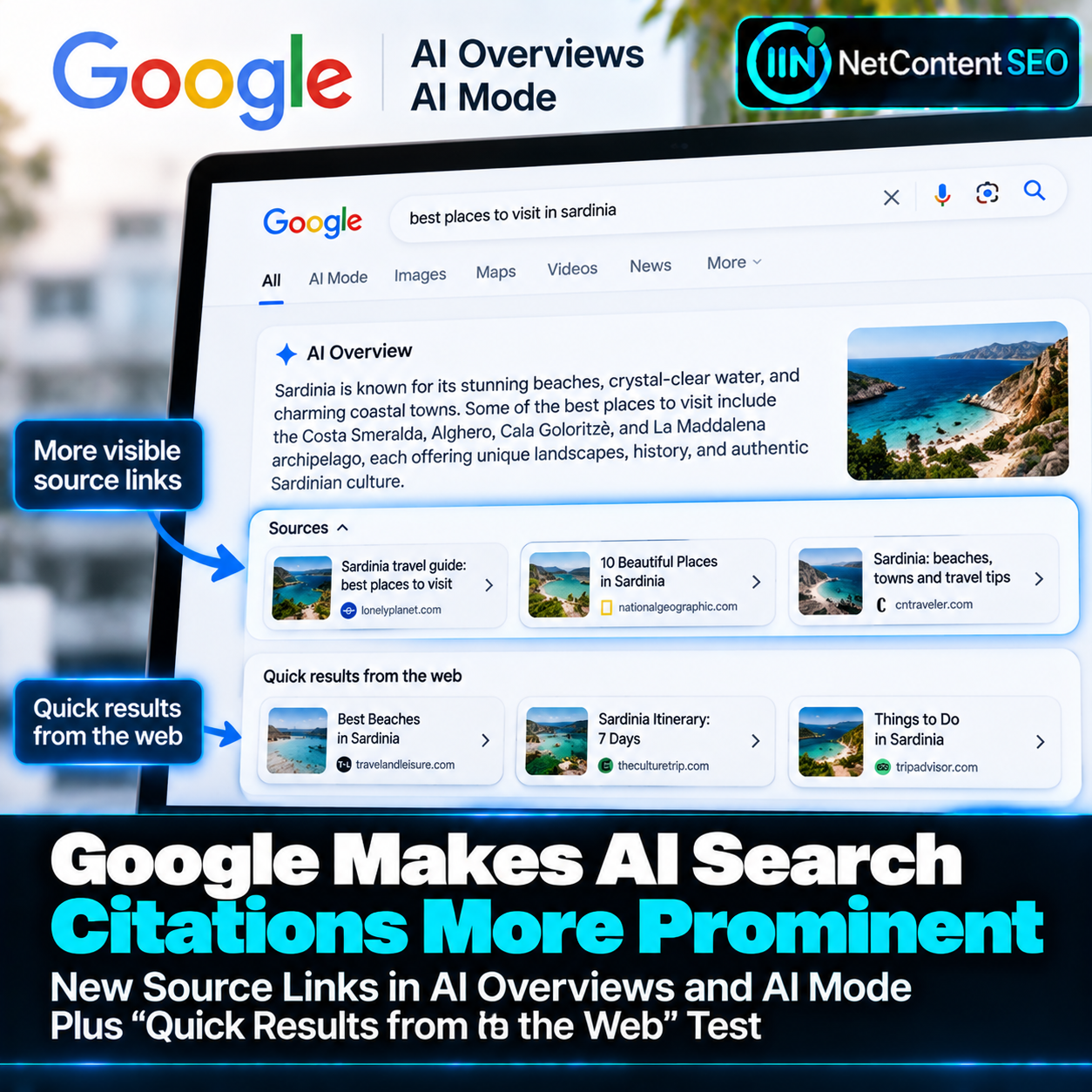

Google has announced changes designed to make links to sources more visible in AI Mode and AI Overviews, alongside a test called “Quick results from the web.” The changes, reported on October 15, 2026, could affect how users discover and visit websites referenced in AI-generated search responses.
For publishers and SEO teams, the central question is straightforward: if source links are easier to notice and use, will more people click through to the sites behind an AI answer? The announcement creates an opportunity to investigate, but it does not by itself prove that referral traffic will increase.
What Google announced
According to Google's announcement and reporting by Android Central, Google is making links to sources more prominent in AI Mode and AI Overviews. The reported changes include more noticeable source links and a test labelled “Quick results from the web.”
The exact presentation and availability may vary as Google tests and rolls out interface changes. The “Quick results from the web” feature should be described as a test, rather than a universally available feature.
Why more visible citations matter
AI-generated answers can summarize information before a user visits any website. In that setting, the placement and presentation of source links influence whether users recognize that further reading is available and can identify where information came from.
Making citations easier to see may improve source discovery and give publishers a clearer route to a click. It may also help users distinguish a synthesized answer from the underlying reporting, documentation or analysis supporting it.
Does this mean more traffic for publishers?
Not necessarily. A more prominent link can reduce friction, but clicks also depend on the query, the usefulness of the answer, the source's relevance and whether the user needs additional detail. Some users may be satisfied by the AI response and leave without visiting a source.
Google's announcement, as described in the available sources, does not establish a measured increase in publisher traffic attributable to these changes. Claims about improved click-through rates or recovered referral traffic would require data from Google or a well-designed independent analysis.
Implications for SEO and AI Search measurement
For SEO professionals, the development reinforces the need to measure more than rankings or whether a brand is mentioned in an AI answer. Teams should distinguish between being cited, having a visible link, receiving a click and generating an engaged session or conversion.
Where analytics allow, publishers can monitor referral sessions from AI-related search experiences, landing-page engagement and conversion quality. Search Console and web analytics provide different views of discovery and site visits, so changes should be interpreted carefully rather than attributed to one interface update without supporting evidence.
What publishers should do now
- Keep important pages accurate, useful and easy to navigate after a visitor clicks through.
- Track AI-related referrals and landing-page engagement where the available analytics support it.
- Document changes in citation visibility separately from changes in impressions, clicks and conversions.
- Watch for further official details about “Quick results from the web” and the availability of the updated citation interface.
There is no evidence in this announcement that publishers need a new schema format or that Google has introduced a new ranking factor. The practical focus is on understanding how users interact with citations and measuring the outcomes.
NetContentSEO assessment
More visible source links are a potentially positive development for publishers because they make attribution and onward navigation easier to notice. But the business impact remains an open question. The meaningful test is not simply whether citations look more prominent; it is whether users click them, find value on the destination pages and continue to engage.
Sources: Google Blog; Android Central — Google Search improves linked sources in AI Overviews.